
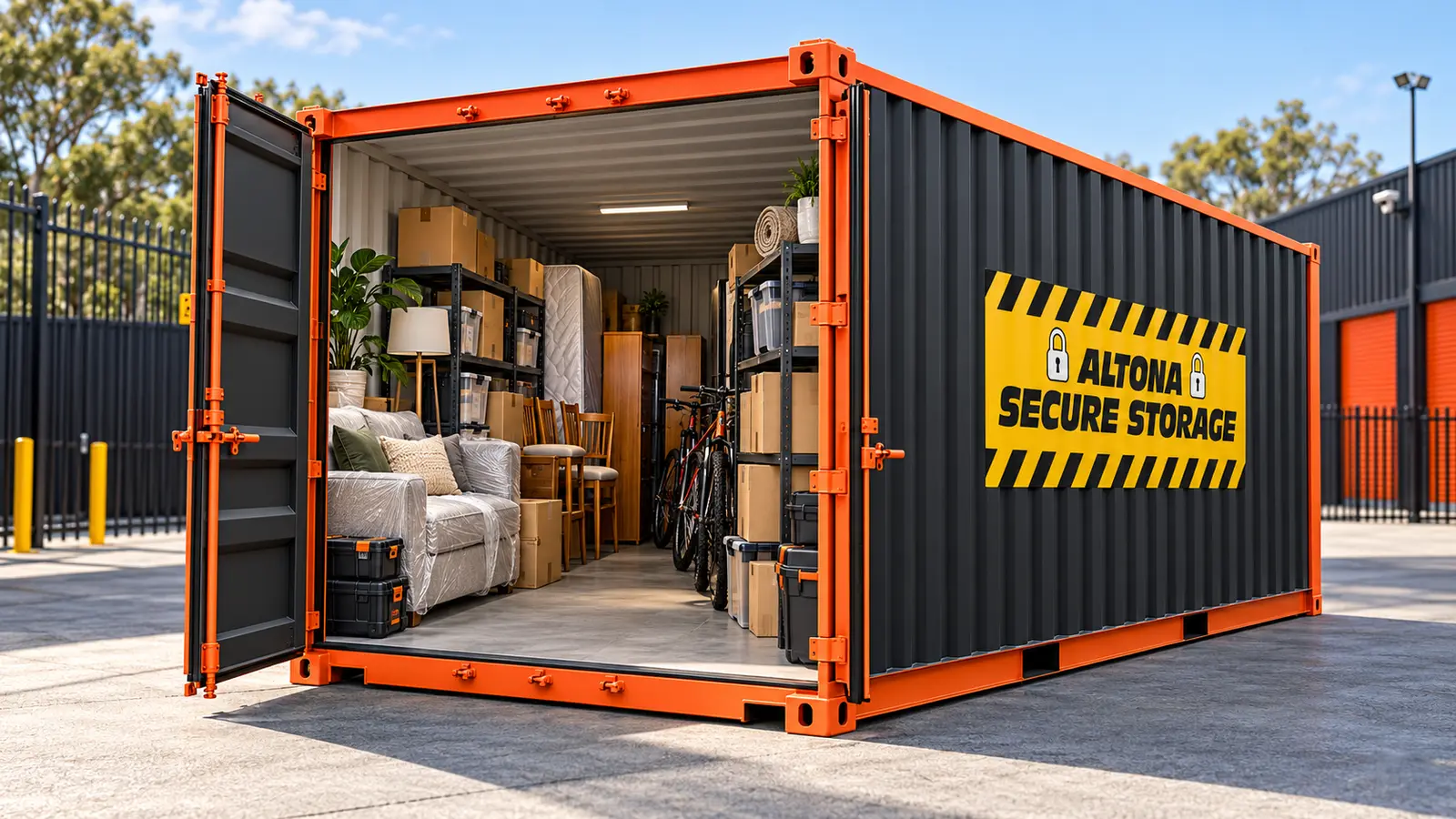
A standard 20ft storage container provides close to 33m³ of internal volume and roughly 14m² of floor area. In practical terms, it can often hold the contents of a well-packed two-to-three-bedroom home, a substantial renovation load, or organised stock and equipment for a small business.
A typical 20ft container measures about 5.9m long, 2.35m wide and 2.39m high inside. It can accommodate furniture, appliances, mattresses, moving cartons, bicycles, tools or business inventory—but the usable result depends on the shape of your items and how you organise the space.
What are the dimensions of a 20ft storage container?
People often search for the outside length and assume that tells them everything they need to know. For storage planning, the internal dimensions and door opening are more useful. A standard general-purpose container is usually close to the measurements below, although small variations are possible.
| Measurement | Typical 20ft container size | Why it matters |
|---|---|---|
| External dimensions | 6.06m long × 2.44m wide × 2.59m high | Shows the overall physical footprint |
| Internal dimensions | 5.90m long × 2.35m wide × 2.39m high | Helps you plan furniture, shelving and access |
| Door opening | Approximately 2.34m wide × 2.28m high | Determines whether a bulky item can pass through the entrance |
| Internal volume | Approximately 33m³ | Useful for broad capacity comparisons |
| Floor area | Approximately 13.9m² | Helps with a simple floor plan before loading |
The advertised cubic capacity is the total internal volume, not a promise that every cubic metre will be usable. Sofas, bicycles, chairs and equipment create gaps, while a safe access aisle also consumes space. A realistic plan should allow for awkward shapes, protective wrapping and the way you intend to retrieve belongings.
What household items fit in a 20ft storage container?
A 20ft container is popular for household storage because one rectangular space can hold a mixture of large furniture and stacked cartons. A well-organised load may suit the contents of a two-to-three-bedroom home, but every household is different. Large modular lounges, gym equipment, workshop benches or an extensive garage collection can change the calculation quickly.
Living and dining room furniture
Common items include lounges, armchairs, coffee tables, television units, bookcases, dining tables and chairs. Remove legs or modular sections when the manufacturer allows it, keep fixings in labelled bags and attach each bag securely to the matching piece. Protect timber edges and upholstered surfaces with clean moving blankets or breathable covers.
Bedroom contents
Bed frames, mattresses, bedside tables, drawers and dismantled wardrobes can use vertical space efficiently. Keep mattresses in suitable protective covers and support them so they cannot bow or fall. Flat-packed bed rails and slats can be bundled together, clearly labelled and positioned along a side wall.
Appliances and laundry items
Refrigerators, freezers, washing machines and dryers can be stored when they have been emptied, cleaned and completely dried. Defrost cooling appliances well before the move and leave doors slightly open where safe to reduce trapped odours. Secure power cords and hoses so they are not crushed during loading.
Boxes, sporting gear and outdoor belongings
Moving cartons, bicycles, camping equipment, seasonal decorations, gardening tools and outdoor furniture can fit around the larger household pieces. Use consistent carton sizes where possible, label more than one side of each box and avoid placing heavy cartons on fragile belongings.
Measure your longest, widest and tallest pieces before counting boxes. A bulky sofa or workbench may determine the loading plan even when the rest of the household packs neatly.
Is a 20ft container suitable for moving or renovating?
It can be particularly useful when settlement dates do not align, a home needs work before move-in, or furniture must be cleared from several rooms. Keeping the load together in one dedicated space can reduce repeated handling and help trades work without navigating around household belongings.
For a staged move, place items needed first near the doors: cleaning supplies, basic kitchen cartons, work clothes, bedding and essential furniture parts. Items unlikely to be needed until the end of the project can go deeper inside. Our detailed guide to preparing furniture and belongings for container storage covers cleaning, wrapping, labelling and appliance preparation.
What business items fit in a 20ft storage container?
A 20ft container can provide practical overflow space for trades, retailers, online sellers, offices and growing local businesses. The best business layout is rarely the one that squeezes in the greatest possible volume. It is the layout that allows staff to identify and retrieve the right item without unloading everything in front of it.
Stock and e-commerce inventory
Consistently sized cartons can be grouped by product line, season or stock rotation. Keep fast-moving products near the doors, use clear location codes and record where each category is stored. Leave enough room to inspect labels without shifting an entire row.
Trade tools and project equipment
Tool cases, boxed fittings, ladders, portable equipment and project materials can be arranged into dedicated zones. Stable freestanding shelving may improve access to smaller items, provided it is suitable for the intended load and positioned securely. Heavy equipment belongs low and should never create an unstable stack.
Office furniture, records and event equipment
Spare desks, chairs, display materials, promotional equipment and appropriately packed records can be stored away from the main workplace. Sensitive documents, valuable data and items needing controlled temperature or humidity may require a more specialised solution, so consider the nature of the contents rather than treating every business item the same way.
For a deeper operational checklist, see our business container storage guide for Melbourne's west.
How do you pack a 20ft container efficiently?
The most effective loading plan starts before the first item reaches the facility. A simple inventory, a few measurements and a rough floor plan can prevent wasted space and make future visits much easier.
1. Create an inventory by room or business function
Group items into practical categories such as bedroom, kitchen, office, tools or retail stock. Mark anything fragile, heavy, frequently needed or difficult to move. Photograph valuable or complicated items before packing and keep the inventory somewhere accessible outside the container.
2. Measure bulky items and the door opening
Measure furniture and equipment in the orientation that will be used to move it. Check that each item can pass through the doorway and turn into position. If a piece can be dismantled safely, record its packed dimensions rather than its assembled size.
3. Draw a basic floor plan
Sketch the rectangular floor area and reserve locations for the bulkiest items first. Decide whether you need a central aisle, side aisle or direct path to a particular stock category. Regular access requires more open space than long-term storage that will remain untouched.
4. Load stable, heavy items first
Place robust furniture, equipment and heavy cartons low. Distribute weight sensibly and avoid concentrating everything in one unstable tower. Never rely on a fragile carton or lightweight table to support a heavy load.
5. Use height without creating unsafe stacks
The internal height provides useful capacity, but only when items are stable. Stack cartons with the heaviest at the bottom, keep labels visible and avoid leaning tall pieces where they may shift. Fill predictable spaces with lighter soft items rather than forcing boxes into unsafe positions.
6. Protect airflow and keep everything dry
Only load belongings that are clean and completely dry. Avoid trapping moisture under sealed plastic around fabric or timber. Use appropriate covers, allow reasonable air movement and never place damp outdoor equipment directly into storage.
7. Make the doors your retrieval zone
Keep the items you are most likely to need within easy reach. For a household move, that may include essential cartons and furniture hardware. For a business, it may be high-turnover stock, current project tools or event equipment with an upcoming booking.
How can you estimate whether your belongings will fit?
Online capacity statements are useful starting points, but a personal inventory gives a better answer. Use this process:
- List the large items. Record the dimensions of lounges, mattresses, tables, appliances, cabinets and equipment.
- Count cartons by size. Separate book cartons, standard moving boxes and oversized cartons rather than combining them into one number.
- Identify awkward shapes. Bicycles, chairs, gym equipment and garden tools rarely create perfect stacks.
- Decide on access. Reserve a walkway and retrieval zone if you expect to visit during the storage period.
- Allow a margin. Moves, renovations and business projects often create additional items after storage begins.
If the list still feels difficult to judge, send the Altona Secure Storage team a summary of the largest items, approximate carton count and intended access pattern. Practical details are more useful than a guess based only on the number of rooms.
What should you avoid storing in a 20ft container?
Container storage is versatile, but it is not suitable for every item. Storage agreements commonly restrict hazardous, flammable, explosive, illegal, perishable, wet or living contents. Fuel, gas bottles, chemicals and items that could leak or attract pests require particular caution.
Irreplaceable documents, sensitive electronics, fine art, medicines and belongings that require controlled temperature or humidity may also need specialised storage. Always review the facility terms and ask before move-in if an item is unusual, valuable or potentially hazardous.
What should you check when choosing 20ft container storage?
The container capacity is only part of the decision. Compare the real experience of using the facility, including:
- Site monitoring, lighting and access controls
- Ground-level loading arrangements
- Access times and the process for visiting
- Lock requirements for the individual container
- Weather resistance and the condition of the container
- Prohibited-item rules and insurance responsibilities
- Notice periods, payment terms and move-out arrangements
Altona Secure Storage provides monitored, weather-resistant, ground-level container storage at 7 Reserve Court, Altona. The location is convenient for households, trades and businesses across Melbourne's west, including Altona, Williamstown, Point Cook, Truganina, Werribee and Sunshine.
Frequently asked questions about 20ft storage containers
How big is a standard 20ft storage container inside?
Typical internal dimensions are approximately 5.9 metres long, 2.35 metres wide and 2.39 metres high, providing close to 33 cubic metres of internal volume. Exact measurements can vary slightly between individual containers.
How much household furniture fits in a 20ft storage container?
A carefully packed 20ft container can often accommodate the contents of a two-to-three-bedroom home, including furniture, appliances and moving cartons. The result depends on furniture size, whether pieces are dismantled and whether you leave an access aisle.
Can a 20ft container hold business stock and tools?
Yes. The rectangular floor plan suits cartons, shelving, tools, equipment, records and overflow inventory. Businesses that need frequent access should create labelled zones and keep fast-moving items near the doors.
How many moving boxes fit in a 20ft storage container?
There is no reliable universal box count because carton sizes and the mix of furniture vary. Measuring the largest items and building a room-by-room inventory produces a more useful estimate than relying on a single box number.
What is the best way to pack a 20ft storage container?
Load heavy stable items first, place frequently needed belongings near the doors, use vertical space safely, protect furniture with breathable covers and leave a central walkway if you expect to visit regularly.
What should not be stored in a 20ft container?
Do not assume hazardous, flammable, illegal, perishable, wet or living items are permitted. Check the storage agreement before move-in and ask about any item that may need specialised conditions or approval.
Check 20ft container availability in Altona
If you are planning a move, renovation, declutter or business storage project, start with a list of the largest items and how often you will need access. Explore our secure storage service areas across Melbourne's west or request 20ft container availability online. The more detail you provide about the load, the easier it is to plan a practical layout.